• Home
  • Mobile
  • Laptop
  • Camera
  • Other Devices
  • Contact
    • Category
    • Category
    • Category
  • Advertise
Mobile World . Powered by Blogger.
facebook twitter instagram pinterest bloglovin Email

Apna Mobile Bazaar


Camera Body and Design

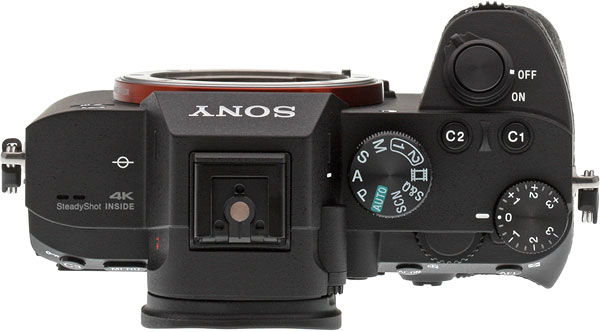
  • If you've held a Sony Alpha camera, you probably have noticed that they tend to follow a very similar design path. Even when they are different, like the subtle body changes to the A9, the general aesthetic is the same. Holding the A7 III feels exactly like holding the A7R III...because they are exactly the same. From a body design perspective, it is impossible to visually tell the A7R III and the A7 III apart aside from the model number on the front and back of the camera.
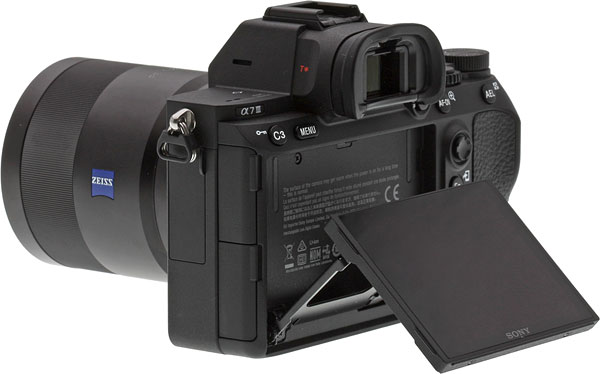
  • If you're new to the body and want to compare it to the A7 II, the biggest and most noticeable difference is on the back of the camera, where Sony removed the AF/MF and AEL switch and changed it to a joystick/toggle. This same change was made on the A7R III and allows you to more easily navigate a menu or adjust focus points while shooting. Though the A7 III has a touchscreen and the control wheel on the back of the camera are useful for most of the things you might find yourself needing the joystick for, it's still an addition that many customers asked for and therefore Sony delivered.
  • Other changes include moving a few of the custom function buttons around and relocating the video record button, which used to be up near the shutter button, to the rear of the camera to the right of the EVF.
  • Speaking of the EVF, the A7 III features a high-resolution, high-contrast, fast-start XGA OLED Tru-Finder with approximately 2.3 million dots for extremely accurate, true-to-life detail reproduction. Standard or High display quality settings are available for both the viewfinder and monitor as well. The Mark III's EVF is also noticeably larger than the Mark II's, with a magnification of 0.78x versus 0.71x.
  • The new camera also features what Sony is calling 'My Menu' functionality, which allows up to 30 menu items to be registered for instant recall when needed. You can also apply star ratings to your still images through the camera controls for easier image playback and review, and edit the first three characters of all still image files. Additionally, there is a total of 81 functions that are assignable to 11 custom buttons, and the camera is both dust and moisture resistant.
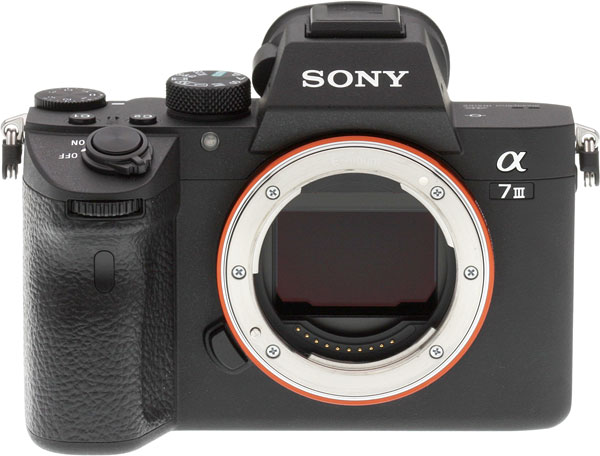
The A7 III and its 24.2 megapixel sensor

  • Opting for a smaller and more manageable 24.2-megapixel sensor, the A7 III is equipped with a back-illuminated Exmor R CMOS image sensor that is paired with a front-end LSI that Sony says effectively doubles the readout speed of the image sensor, as well as an updated BIONZ X processing-engine that boosts processing speed by approximately 1.8 times compared to the A7 II.
  • These components work together to allow the camera to shoot at faster speeds while also enabling its impressive ISO range of 100 - 51,200 (expandable to ISO 50 - 204,800 for still images) and an overall 1.5 stop improvement in image quality over the A7 II. The camera also features the same ~15 stops of dynamic range at low sensitivity settings found on the A7R III, that Sony says ensures outstanding overall performance at all settings and in all shooting conditions, with significant advancements in accurate color reproductions of skin tones and the vibrant natural colors.
  • The A7 III can also output 14 bit RAW format even in silent and continuous shooting modes, and is equipped with a 5-axis optical image stabilization system that results in a 5.0-stop shutter speed advantage.
Bringing A9-like autofocus performance to the table

The A7 III features a level of AF performance that borrows much from the success of the A9 and A7R III, and has been greatly improved over that in the A7 II. The camera has 425 contrast AF points that work with a 693-point focal-plane phase-detection AF system inherited from the aforementioned A9. This innovative AF system covers approximately 93% of the frame, ensuring reliable focusing and tracking for even the most difficult to capture subjects.
AF response and tracking has also been greatly improved in the new camera, with almost twice the focusing speed in low-light conditions and twice the tracking speed compared to the previous model as a result of the faster image sensor readout. This allows complex and unpredictable motion to be captured with far greater precision and accuracy.
Sony has also added their Eye AF feature to the A7 III, which works even in AF-C mode. Eye AF is a very useful feature that allows you to lock on and track a subject's eye while they are in motion and even through obstructions. Other additional improvements in focusing flexibility include using the aforementioned joystick for moving focusing points quickly, the addition of touch focusing capability, AF availability in Focus Magnifier mode, and an "AF On" button.
Fast to shoot and with an impressive buffer
The new A7 III is equipped with an updated image processing system that allows it to shoot full resolution images at up to 10 fps with continuous, accurate AF/AE tracking for up to 177 Standard JPEGs, 172 Fine JPEGs, 163 Extra Fine JPEGs, 89 compressed RAW images or 40 uncompressed RAW images, according to Sony. (Unfortunately, there's still no lossless compressed RAW format.) This high speed mode is available with either a mechanical shutter or a completely silent shooting, a feature we saw first in the A9 and has been brought to the A7R III and now the A7 III. The camera can also shoot continuously at up to 8 fps in "live view" mode with minimal lag in the viewfinder or LCD screen.
Sony listened to customer feedback, and allows you to access many of the features of the A7 III even while it is writing large groups of burst images. You can access the "Fn" (Function) and "Menu" buttons, image playback and several other menus and parameters including image rating and other sorting functions. Sony also added an on-screen prompt to show you how many images remain to be written.
Additionally, if there is fluorescent or artificial lighting present in a shooting environment, users can activate the Anti-flicker function to allow the A7 III to automatically detect frequency of the lighting and time the shutter to minimize its effect on images being captured. This minimizes any exposure or color anomalies that can sometimes occur during burst shooting and/or at the top and bottom of images shot at high shutter speeds.
Full frame, high quality 4K video
  • The A7 III brings many of the video features found in the A7R III to the table, including 4K UHD (3840 x 2160 pixels) video recording across the full width of the full-frame image sensor, using a full pixel readout without pixel binning to collect about 2.4 times the amount of data required for 4K movies, oversampling it to produce high quality 4K footage.
  • An HLG (Hybrid Log-Gamma) picture profile is available on the A7 III as well, which supports an Instant HDR workflow, allowing HDR (HLG) compatible TV's to playback 4K HDR imagery.
  • Further, both S-Log2 and S-Log3 are available for increased color grading flexibility, as well as Zebra functionality, Gamma Display assist and proxy recording. The camera can also record Full HD at 120 fps at up to 100 Mbps, allowing footage to be reviewed and eventually edited into 4x or 5x slow motion video files in Full HD resolution with AF tracking.
Upgraded storage options, connectivity & battery life
  • Sony's newest full-frame camera is equipped with a variety of enhanced capabilities that were first implemented in the A9 and then again in the A7R III. These include dual media slots, with support in one slot for UHS-II type SD memory cards (the second slot supports UHS-I SD or Memory Stick PRO Duo cards, and in cases of dual writing, top write speeds are limited to the slowest card). You also have a variety of options for storing content in each of the cards, including separate JPEG / RAW recording, separate still image / movie recording, relay recording and more.
  • The A7 III is also is capable of seamlessly transferring files to a smartphone, tablet, computer or FTP server via Wi-Fi (with NFC) and now includes Bluetooth, while also offering a SuperSpeed USB (USB 3.1 Gen 1) USB Type-C terminal for increased flexibility in power supply and faster image transfer speed during tethered shooting. The camera still has a Multi Micro-B USB 2.0 port, Micro HDMI (Type D) port, 3.5mm stereo microphone jack (with power), 3.5mm stereo headphone jack, Multi Interface Hot Shoe, and an IR remote receiver.
  • Battery life has been greatly extended as well -- with a CIPA rating of up to 710 shots per charge when using the LCD monitor or 610 shots using the EVF, the A7 Mark III offers the world's longest battery life of any mirrorless camera (without a battery grip). The new camera utilizes Sony's Z-series NP-FZ100 battery pack that has approximately 2.2 times the capacity of the W-series NP-FW50 battery utilized in the A7 II. This is the same battery that brought excellent battery life to both the A9 and A7R III. In-camera charging is supported and an AC/USB adapter is provided, but a dedicated battery charger is not included.
Sony A7 III Pricing and Availability
The Sony A7 III began shipping in April 2018 for about $2,000 USD for the body and $2,200 in a kit with the FE 28-70mm f/3.5-5.6 OSS lens. In Canada, list price is $2,600 CAD for the body and $2,800 for the kit. 
Sony A7 Mark III Key Features:
  • Newly developed back-illuminated 24.2MP full-frame Exmor R CMOS sensor to capture even the finest detail in most conditions
  • Approx. 15-stops of dynamic range to showcase subtle graduations from shadows to highlights
  • Impressive ISO range of 100-51,200 which is expandable to 50-204,800, allowing for noise-free low-light capture
  • 14-bit RAW capture even in silent and continuous shooting modes
  • 5-axis 5-step in-body image stabilisation, making it possible for users to shoot handheld at lower shutter speeds, while also providing smoother video capture
  • 4D Focus – The A7 Mark III Features a massive 693 phase-detection, and 425 contrast detection AF points
  • With implementation of focal-plane phase-detection technology, the camera's autofocus system is approximately twice as fast as in previous models
  • Like the flagship A9, the camera features enhanced AF tracking, allowing for precise focus results when shooting video, or in continuous/burst modes with moving subjects
  • Utilise the touch screen to find focus in a shot thanks to the A7 Mark III's Touch Focus and Touch Pad functions. Either tap on the rear screen to find your focus, or intuitively drag the focus frame across the shot while using the viewfinder
  • Shoot in a continuous burst at up to 10 frames per second with AF/AE tracking, or up to 8 frames per second burst shooting when in Live View mode
  • Capture stunning 4K High Dynamic Range video (without pixel binning) and make the most of the new Hybrid Log Gamma profile for extra flexibility in post-production
  • Unlike the previous A7 model, the Mark III uses the high-capacity NP-FZ100 battery, allowing users to shoot up to 710 images on one charge.
Share
Tweet
Pin
Share
No comments


And if you want to grab a great camera at a great price, you're in luck. Right now, ahead of Prime Day 2019, we're staying alert for the very best deals on DSLRs as they go live. With a handful of older models making out list, and some newer ones that manufacturers might want to boost, there's every chance that some of these might drop in price on or before the main event. So stay tuned.

DSLRs have long been the choice for professional users, thanks to their excellent image quality, manual control and flexibility in terms of lens options. Over the years, manufacturers started to fill their lines with options for enthusiasts and beginners too, and soon there was a fitting choice for first-time photographers through to those working in the most testing environments, and everyone in between.

Today, mirrorless cameras are incredibly popular as they manage to offer the benefits described above but, usually, in an even more compact and lighter package. The reason? They lack the mirror common to DSLRs (hence the name), and most replace the optical viewfinder with high-resolution electronic alternatives too. They may use smaller and lighter lenses too, which further helps to reduce size and weight.

If you want to know more about how they compare, read this: Mirrorless vs DSLR: 10 key differences. Or, if you want to know more about different camera types in general, check out our step-by-step guide: What camera should I buy?


BEST DSLR CAMERA


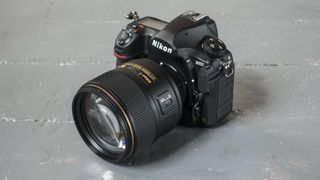
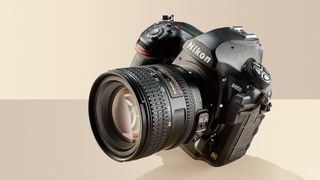
Nikon D850
The D850 isn't the newest model here, but with its high-resolution sensor, speedy burst rate and solidly constructed body, it's still arguably the best option for many users right now.
While mirrorless cameras are grabbing all the headlines at the moment, DSLRs remain relevant to many users. A DSLR is, after all, still the cheapest way to get a camera with interchangeable lenses and a viewfinder (you'll find most entry-level mirrorless cameras don't have viewfinders).

At the other end of the scale, almost all professional sports, press and wildlife photographers choose full-frame DSLRs over every other camera type. Mirrorless cameras are catching up here, but a combination of excellent autofocus systems, long battery life, wide-ranging native lens options and strong accessory support give them the edge.

That said, there are some cracking mirrorless cameras out there at the moment that are taking the place of DSLRs in pro photographers' kit bags, including the Fujifilm X-T3, Olympus OM-D E-M1 II, Panasonic Lumix S1 and Sony Alpha A7R III.

In between entry-level and full-frameDSLRs are a whole range of models aimed at different users, different levels of experience and different budgets. Here's our pick of the best DSLR cameras you can buy right now.


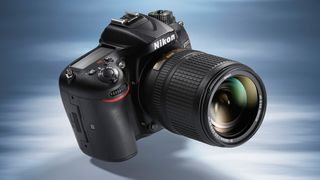
Great value option: Nikon D7200
This old-timer is still a cracking option for enthusiasts

Sensor: APS-C CMOS | Megapixels: 24.2MP | Autofocus: 51-point AF, 15 cross-type | Screen type: 3.2-inch screen, 1,299K dots | Maximum continuous shooting speed: 6fps | Movies: 1080p | User level: Intermediate

Before we get onto our top 10 picks of the best DSLRs you can buy right now, let's take a look at this great value option. The D7200 is a prime example of an older mid-range DSLR that packs enough under its skin to maintain its relevance in today's market. Ideal for those capturing outdoors, the 24.2MP APS-C sensor lacks a low-pass filter to help it retain plenty of detail, while the 51-point AF system is adept at tracking moving subjects. You also get a tough, magnesium-alloy body that's protected against inclement weather, together with two card slots and a large LCD scree. Its age, and the launch of the D7500 that updated it (below), has allowed its price to drop to a tempting level too. Well worth a look if you don't need the very newest camera

Best DSLR cameras in 2019

1. Nikon D850
High resolution meets high speed

Sensor: Full-frame CMOS | Megapixels: 45.4MP | Autofocus: 153-point AF, 99 cross-type | Screen type: 3.2-inch tilt-angle touchscreen, 2,359,000 dots | Maximum continuous shooting speed: 7fps | Movies: 4K | User level: Expert

It's hard to think of another DSLR that wows like the D850 does. It's on the pricey side for sure, but this is justified by excellent image quality, bags of features and a rugged, weather-resistant magnesium alloy body. The 45MP sensor is one of the highest in terms of resolution in any DSLR, while the 7fps burst mode is unusually high for a camera with such a sensor. Add to that a cracking AF system, wonderful handling and great 4K video, and it's versatility should be easy to appreciate. Like the sound of the D850, but want to go mirrorless? Well, while not strictly a mirrorless version of the D850, Nikon's newer Z7 mirrorless camera shares the same 45MP resolution as the D850, but features some clever tech of its own, including an all-new lens mount.
Share
Tweet
Pin
Share
No comments

REALME X


Realme X
REALME X BRIEF DESCRIPTION
Overview

The Realme X is a new mid-range phone that offers excellent performance. The phone is powered by a Snapdragon Soc and has excellent multitasking abilities. It is one of the best budget devices available in this price range. The in-display fingerprint sensor offers added security. It is one of the first smartphones in this price segment to bring a pop-up selfie camera. The phone has superb specs with strong configuration, a great camera resolution, and a mammoth battery with fast charging. The only negative is that the phone has a non expandable phone memory.

Design
161.2 x 76.1 x 8.6mm
191g
Polycarbonate build
In-display fingerprint scanner
Pop-up selfie camera
USB-C port, Headphone jack

The Realme X, especially the white colorway, is a gorgeous piece of kit. There is a certain elegance in simplicity. Yes, the phone sports a plastic back, but the gleaming white melds into the metal mid-frame and oozes class. It helps that the gently curved back fits comfortably in the palm of your hand.

Like most glossy phones, the Realme X is prone to picking up smudges, but these are easy to wipe off and aren’t very visible. The camera island is mounted centrally and is surrounded by a metal ring that helps with the aesthetic and to prevent scratches, too. There is no fingerprint scanner here: The phone makes of an in-display print reader for user authentication. While the setup process takes a bit long, I found the fingerprint scanner to be one of the fastest around with excellent reliability

The phone isn’t particularly heavy, but it feels appropriately dense to the touch. The power button on the right and the volume rocker on the left both have top-notch tactile feedback and no noticeable wobble. The bottom edge of the Realme X sports a USB-C port, a headphone jack, as well as a grille for the bottom-firing speaker.

Say what you will about pop-up cameras, but I love the expansive displays they enable. The Realme X is no exception and the phone boasts an impressive 91.2 percent screen-to-body ratio. If I had to nitpick, the chin below the screen could have been a bit smaller but it certainly doesn’t ruin the experience.

It wouldn’t be unfair to say that the Realme X takes some design inspiration from the OnePlus 7 Pro, but the location of the pop-up camera certainly isn’t the same. Centrally located, the camera elevates in just 0.7 seconds. Realme put it in the center to allow for more natural-looking selfies. The company claims it has tested the mechanism over 200,000 times, and that it auto-retracts the moment the phone detects a fall. Combined with the sapphire glass top, this should assuage any fears you might have about the reliability of the pop-up camera.

BASIC INFORMATION
Manufacturer:Realme
Model:Realme X
Launch date (global):15-07-2019
Operating system:Android
Os version:9
Type:Smartphone
Status:Launched
Colors:Steam white, Punk Blue
Product Name:Realme X
DISPLAY
Screen size (in inches):6.53
Display technology:IPS
Screen resolution (in pixels):1080 x 2340
Display features:capacitive
Pixel Density (PPI):394
Scratch Resistant Glass:Corning Gorilla Glass 5
Notch Display:NA
CAMERA
Rear Camera Megapixel:48 + 5
Maximum Video Resolution (in pixels):2160p@30fps, 1080p@30fps
Front Camera Megapixel:16
Front Facing Camera:Yes
LED Flash:Yes
Video Recording:Yes
Digital Zoom:Yes
Autofocus:Yes
Touch Focus:Yes
HDR:Yes
Panorama Mode:Yes
Phase detection:Yes
Aperture (f stops):f/1.7
EIS:Yes
Pop-up Camera:Yes
BATTERY
Battery capacity (mah):3765
Talk time (in hours):NA
Removal Battery (Yes/No):No
Support For Fast Charging:Yes
SENSORS AND FEATURES
Keypad type:Touchscreen
Multi touch:Yes
Light Sensor:Yes
Proximity Sensor:Yes
Finger print sensor:Yes
Accelerometer:Yes
Compass:Yes
Gyroscope:Yes
CONNECTIVITY
SIM:Dual
3G Capability:Yes
4G Capability:Yes
Wifi Capability:Yes
Wifi HotSpot:Yes
Bluetooth:Yes
GPS:Yes
VoLTE:Yes
TECHNICAL SPECIFICATIONS
Cpu:Qualcomm SDM710 Snapdragon 710 (10 nm)
CPU speed:2.2 GHz
Processor cores:octa
RAM:4GB
Gpu:Adreno 616
Dimensions (lxbxh- in mm):161.2 x 76 x 8.6
Weight (in grams):191
Storage:64GB
Removable storage (yes or no):No
Share
Tweet
Pin
Share
No comments

Nikon D500 DSLR Camera


Key Features
  • Key Features
    • 20.9MP DX-Format CMOS Sensor
    • EXPEED 5 Image Processor
    • 3.2" 2539k-Dot Tilting Touchscreen LCD
    • 4K UHD Video Recording at 30 fps
    4K UHD Video Recording at 30 fps
As the flagship model within Nikon's DX-format DSLR line, the D500 is characterized by its robust physical construction, apt imaging capabilities, and of course, a more compact, sleek form factor than its FX brethren. Revolving around a 20.9MP CMOS sensor and EXPEED 5 image processor, this camera appeals to both still and video shooters with its fast 10-fps continuous-shooting rate and 4K UHD video recording abilities. The sensor and processor also combine to avail a native sensitivity range up to ISO 51200, which can be further expanded to ISO 1640000 for working in dark and difficult lighting conditions. Benefitting the fast shooting performance, the D500 is also characterized by its expansive Multi-CAM 20K 153-point AF system, which features 99 cross-type points for fast performance and accurate subject tracking capabilities. While sleek in stature, the D500 is by no means slim on functionality and versatility.

Besides the imaging assets, this advanced DSLR also features an impressive handling design that incorporates a 3.2", 2.36m-dot, tilting LCD touchscreen, which affords a comfortable means for working from high and low angles. An updated version of SnapBridge is also featured, which provides Wi-Fi connectivity with NFC, as well as Bluetooth Low Energy technology for linking your mobile device for wireless image sharing. In addition to the convenience features, the D500 is housed within a durable magnesium alloy chassis that is both dust- and weather-sealed for working in inclement conditions and harsh environments.

20.9MP DX-Format CMOS Sensor and EXPEED 5 Image Processor

The DX-format 20.9MP CMOS sensor is paired with the EXPEED 5 image processor to provide an esteemed mixture of high sensitivity, nuanced image quality, and fast overall performance. At native values, a sensitivity range from ISO 100-51200 permits working in a broad array of lighting conditions, an can be further expanded to ISO 50-1640000 (Lo 1 to Hi 5) to handle the most challenging of situations. The mixture of resolution and sensor size also contributes to clean image quality and smooth color transitions with reduced noise throughout the sensitivity range.

In addition to benefitting image quality, the EXPEED 5 processor also affords a wealth of speed throughout the camera system, including a top continuous shooting rate of 10 fps with full-time autofocus and exposure metering. Up to 200 frames can be recorded in a single burst, even when shooting 14-bit lossless compressed NEF files. Additionally, slower continuous shooting rates are available as well as a Quiet Continuous Mode for shooting 3 fps in noise-sensitivity areas.

4K UHD Video Recording

Capable of recording more than just stills, the D500 supports 4K UHD video recording at 30, 25, and 24 fps frame rates and Full HD/HD recording at up to 60 fps, along with the ability to save movie files to the in-camera memory cards or as an uncompressed file to an optional external recorder via HDMI out. For maintained quality and versatility in how your movies look, three image area options are available:
  • 4K UHD movie image format is an area that provides a 1.5x increase in the effective focal length of the lens in use and is reserved for 4K 3840 x 2160 recording.
  • 1.3x-based movie image area provides a 1.3x crop of the DX sensor, and is used for recording FULL HD and HD video.
  • DX-based movie image format utilizes the full width of the DX-format sensor, and is used to record Full HD 1920 x 1080 and HD 1280 x 720 video. This setting is well-suited for shallow depth of field effects and provides the widest field of view.

As with still shooting, the wide range of sensitivities is available for recording in low- and bright-light conditions, ranging from expanded ISO 100-1640000, and sensitivity values are manually adjustable via the dedicated movie-shooting menu. Also, a video-optimized Flat Picture Control mode can be used during recording to flatten the overall contrast curve for more control during post-production and color grading.

Benefitting handheld shooting, an Electronic Vibration Reduction feature can be used during Full HD and HD recording, which minimizes the appearance of camera shake across three axes to control horizontal, vertical, and rotational movements. Additionally, Active D-Lighting can also be employed during Full HD/HD shooting to preserve highlight and shadow detail when working in high-contrast situations.

In regard to handling, a dedicated power aperture button (Pv) makes it possible to achieve smooth, continuous exposure transitions when switching from light to dark areas and Auto ISO can also be used to maintain consistent brightness when working in changing light situations. Audio recording can be handled using the built-in stereo microphone or an optional external mic can be added via the 3.5mm stereo jack for greater control over quality. Regardless if using the in-camera mic or an external mic, audio levels can be adjusted in 20 increments and live monitoring is possible via the headphone jack, which afford 30 different volume levels for playback.

In addition to straight movie recording, time-lapse recording, for up to 9999 consecutive frames shot over the course of up to one week, is also possible with up to 4K UHD/30p output from the camera.

153-Point Multi-CAM 20K Autofocus System

Matching the speed and imaging capabilities is the apt Multi-CAM 20K AF system, which features 153 total phase-detection points, including 99 cross-type sensors for improved subject recognition, and 55 of the points are selectable for greater compositional freedom. Benefitting the use of super telephoto lenses and teleconverters, 15 of the points, including 9 selectable points, are compatible with an effective aperture of f/8 and all 153 points support working with effective apertures of f/5.6 or brighter.

Complementing the abundance of focusing points is a dedicated AF engine, which offers quick response times to benefit tracking fast and randomly moving subjects, even at the top 10 fps shooting rate. The AF engine also contributes to enhanced focusing sensitivity, with all points capable of focusing -3 EV and the center point capable of reading at -4 EV for working in very dark, low-contrast situations.

Furthering the versatility of the focusing system, seven different AF-area modes can be selected to support varying types of subjects matter:
  • Single-Point AF: The camera uses a single point to find focus.
  • Dynamic-Area AF: Available with 25, 72, or 153-point selections, this mode uses a primary single focus point to lock onto focus, and then makes use of the surrounding points for maintaining focus while tracking erratically-moving subjects.
  • Group-Area AF: This mode treats smaller groups of AF points as a single point for a wider field of recognition, and is well-suited to tracking faces or other detailed subjects.
  • 3D-Tracking: Using a subject's color information, this mode utilizes all 153 points to maintain focus on a moving subject while half-pressing the shutter button.
  • Auto-Area AF: This mode makes use of all 153 points to quickly identify the main subject, and then prioritizes recognized faces as portrait subjects in any AF servo mode.

In addition to the range of AF-area modes, an AF lock-on function can also be used to improve subject tracking performance, and can be adjusted by two parameters-quick or delayed blacked shot AF response and erratic or steady subject movement. By configuring these settings, the AF performance can be optimized to handle a wide variety of subject movement types.

Lastly, a unique auto AF fine-tune function can be employed to ensure the best possible focus for each mounted lens. Rather than relying on photographing distance charts, this function lets you achieve precise focus manually in live view, and then have the AF system calibrate itself to the fine-tuned focus position in order to alleviate front- and back-focusing issues.

Body Design

  • A large 3.2" rear LCD monitor features a high 2,359k-dot resolution for clear, vivid playback and live view shooting. The monitor is also a touchscreen for more intuitive menu navigation and settings control, and is usable while shooting, giving you the ability to choose a focus point or an area to set the white balance from. The screen can also be used as a keyboard for quickly entering notes, copyright info, or IPTC information. Additionally, it features a tilting design for easier visibility when shooting from high and low working angles.
  • A bright pentaprism optical viewfinder offers 100% frame coverage and a 1.0x magnification, and incorporates an organic EL display system to provide shooting information for seamless adjustment over camera settings without removing your eye from the viewfinder. Additionally, the optical glass features enhanced coatings for increased brightness, contrast, and color neutrality for more lifelike viewing.
  • Extending file saving capabilities by permitting overflow recording, in-camera file duplicating, or the ability to segregate raw and JPEG files between two cards, the D500 is configured with both SD and XQD memory card slots.
  • A robust magnesium alloy chassis is both dust- and weather-resistant to benefit working in harsh climates and inclement conditions.
  • The ergonomic grip and overall form factor are shaped to benefit handling for extended periods of time and are further accentuated by anti-slip, textured controls and easy-to-open card slot covers. Additionally, most of the rear buttons on the rear of the camera are illuminated for greater visibility when working in dim lighting conditions. Two configurable Fn buttons, one front-facing and the other rear-facing, may be assigned for checking depth of field or used for other shooting controls.
  • The included EN-EL15 rechargeable lithium-ion battery is CIPA-rated to last for approximately 1240 shots per charge in single-frame release modes. The optional MB-D17 Multi-Power Battery Pack can also be added to further extend shooting times.

SnapBridge Wi-Fi Connectivity

Supporting a wealth of sharing and tagging possibilities, the D500 features built-in SnapBridge Wi-Fi connectivity to enable seamless transfer of imagery as well as remote shooting capabilities. BLE – Bluetooth Low Energy technology enables communication between the camera and a smart device. Additionally, the mobile device can remotely trigger the shutter and display a live view image from the camera to enable working from a distance. NFC (Near Field Communication) is also supported to provide a quick and simple tap-to-connect method for linking your mobile devices with the camera.

For faster wireless performance, the D500 is also compatible with the optional WT-7A Wireless Transmitter enabling transmission of image files via FTP server or computer at speeds of up to 866.7 Mbps.

Scene Recognition System and Exposure Metering

The intelligent Scene Recognition System with 3D Color Matrix Metering III utilizes a 180k-pixel RGB sensor to evaluate and analyze all aspects within a scene, including brightness, contrast, subject distance, and the scene colors, to quickly determine an accurate exposure and white balance setting to best render the scene at hand. The information gathered is also checked against onboard reference images to ensure consistency from image to image in regard to exposure, white balance, i-TTL flash settings, and subject-tracking AF performance.

Other Camera Features

  • Three types of auto white balance are available: Auto 0, which maintains natural white values under any lighting condition; Auto 1, which maintains a balances of color between the subject and ambient light conditions; and Auto 2, which renders colors with a natural warmth and retains the colors of various types of lighting.
  • In-camera flicker reduction is available for both stills shooting and movie recording.
  • Three different sizes of raw files can be used depending on your output needs; raw size medium and small are 12-bit lossless compressed NEF files while the large file size is a 14-bit lossless uncompressed or compressed NEF file.
  • Spot White Balance control for live view shooting makes setting the white balance as easy as pointing to the area in the frame that should be white. Additionally, 1-6 preset white balance settings can be stored for easier switching between different light sources.
  • The D500 is compatible with the radio-controlled Advanced Wireless Lighting system, which permits working with the optional WR-R10 Controller and WR-A10 Receiver, along with the SB-5000, for intuitive, controllable wireless flash shooting.
  • Picture Control modes allow you to set predefined looks to imagery in-camera and include Landscape, Monochrome, Neutral, Portrait, Standard, Vivid, Flat, and user-customizable settings.
  • Language support: Arabic, Bengali, Bulgarian, Chinese (Simplified and Traditional), Czech, Danish, Dutch, English, Finnish, French, German, Greek, Hindi, Hungarian, Indonesian, Italian, Japanese, Korean, Marathi, Norwegian, Persian, Polish, Portuguese (Portugal and Brazil), Romanian, Russian, Serbian, Spanish, Swedish, Tamil, Telugu, Thai, Turkish, Ukrainian, and Vietnamese.
Share
Tweet
Pin
Share
No comments
Older Posts

Airpod i11

Airpod i11
TWS i11 5.0 True Wireless Earphone

About me


Follow Us

  • facebook
  • twitter
  • instagram
  • Google+
  • pinterest
  • youtube

Labels

  • Laptop
  • Mobile
  • camera

recent posts

Sponsor

Facebook

Blog Archive

  • ▼  2020 (1)
    • ▼  July (1)
      • LG Q92
  • ►  2019 (57)
    • ►  December (1)
    • ►  October (10)
    • ►  September (14)
    • ►  August (32)

Contact Form

Name

Email *

Message *

Created with by ThemeXpose | Copy Blogger Themes