• Home
  • Mobile
  • Laptop
  • Camera
  • Other Devices
  • Contact
    • Category
    • Category
    • Category
  • Advertise
Mobile World . Powered by Blogger.
facebook twitter instagram pinterest bloglovin Email

Apna Mobile Bazaar


Google Pixel 4 XL 
  • Google Pixel 4 XL smartphone was launched on 15th October 2019. The phone comes with a 6.30-inch touch screen display with a resolution of 1440x3040 pixels at a pixel density of 537 pixels per inch (ppi) and an aspect ratio of 19:9.
  • Google Pixel 4 XL is powered by an octa-core Qualcomm Snapdragon 855 processor. It comes with 6GB of RAM.
  • The Google Pixel 4 XL runs Android 10 and is powered by a 3700mAh non-removable battery. The Google Pixel 4 XL supports proprietary fast charging.
  • As far as the cameras are concerned, the Google Pixel 4 XL on the rear packs a 16-megapixel primary camera with an f/2.4 aperture and a pixel size of 1.0-micron and a second 12.2-megapixel camera with an f/1.7 aperture and a pixel size of 1.4-micron. The rear camera setup has phase detection autofocus. It sports a 8-megapixel camera on the front for selfies, with an f/2.0 aperture and a pixel size of 1.22-micron.
  • Google Pixel 4 XL based on Android 10 and packs 64GB of inbuilt storage. The Google Pixel 4 XL is a dual-SIM (GSM and GSM) smartphone that accepts Nano-SIM and eSIM cards.
  • Connectivity options on the Google Pixel 4 XL include Wi-Fi 802.11 a/b/g/n/ac, GPS, NFC, USB Type-C, 3G, and 4G with active 4G on both SIM cards. Sensors on the phone include accelerometer, ambient light sensor, barometer, gyroscope, proximity sensor, and compass/ magnetometer.
  • The Google Pixel 4 XL measures 160.40 x 75.10 x 8.20mm (height x width x thickness) and weighs 193.00 grams. It was launched in Clearly White, Just Black, and Oh So Orange colours. It bears a glass body.
Google Pixel 4 release date and price
  • The Google Pixel 4 release date is October 24, with Pixel 4 pre-orders open from October 15. The Pixel 4 and Pixel 4 XL is available via every major US carrier, including AT&T, Verizon, Sprint, T-Mobile, X-Finity, Spectrum Mobile and Google Fi.
  • It'll be coming to a number of countries worldwide on October 24, including the US, UK and Australia.
  • The Google Pixel 4 price starts at $799 / £669 / AU$1,049 for the 64GB of storage model, while the 128GB Pixel 4 price is $899 / £769 / AU$1,199.
  • That means the Pixel 4 has the same launch price as the Pixel 3 had in the US, while in the UK the new handsets actually have a lower launch price than their predecessors.
Google Pixel 4 design and display
  • While there's not a whole lot that's new about the Google Pixel 4, the design has been updated. The handset has a metal frame which runs round the circumference of the device providing a solid structure, finished with a rubberized black coating.
  • Initially this feels a little odd to the touch. We're used to the cool, premium feel of metal or glass when we pick up a flagship smartphone these days, and the duller finish on the sides of the Pixel 4 doesn't ooze the same high-end appeal.
  • However, after a couple of minutes of handling the Pixel 4, the finish starts to make more sense. It provides an awful lot of grip compared to all-glass/metal rivals, and allows the phone to sit comfortably in the hand.
  • With its 5.7-inch display, the Pixel 4 is one of the smaller flagship devices around, and is thus usable one-handed, with the extra grip on the sides helping it to feel secure. The Pixel 4 measures 147.1 x 68.8 x 8.2mm and weighs 162g.
  • It's not a 'compact' device however, and those with smaller palms may still need to employ both hands to comfortably use the Pixel 4.
  • The display takes up most of the front of the phone, but there's still a bezel above and below, with Google once again opting not to use a notch on its standard flagship model (the Pixel 3 XL did sport a notch, but for the Pixel 4 XL Google has reverted to a bezeled design).
  • On the right side of the phone you'll find the power and volume buttons, with the former flaunting a contrasting color to the black trim of the Pixel 4 for a little visual interest.
  • There's also a change on the rear, with a large, square camera block sitting in the top-left corner – it's a similar aesthetic to that of the new iPhone 11 series.
  • It's not an especially stylish implementation, but it has allowed Google to group two cameras (the first time it's included a second snapper on the rear of a phone), the flash and a few sensors into one area.
  • You get stereo speakers on the Pixel 4, while the handset comes with an IP dust and water resistance rating, allowing it to survive a short submersion in water.
  • The Google Pixel 4 comes in three colors: Just Black, Clearly White and the new Oh So Orange.
  • Taking a closer look at the Google Pixel 4 display, the handset has a Full HD+ resolution with a pixel density of 444ppi – that's good, and it looks great, but the Pixel 4 XL has a higher-resolution panel.
  • It also has a refresh rate of 90Hz which should mean smoother scrolling and slicker gameplay.
Where's the Pixel 4 fingerprint scanner?
  • A notable omission from the rear of the Google Pixel 4 is a fingerprint scanner – in fact, this particular feature is missing from the phone completely. Google has decided to go all-in on face unlock, which it claims is quick and easy to use.
  • However, while Apple has had success with Face ID on the iPhone X and newer iPhone 11, the Android ecosystem (and especially the apps available on the platform) isn't quite at the same stage.
  • If you currently use your fingerprint to sign into Android apps, you'll find your biometric login options limited on the Pixel 4.
  • Google says it will work with app developers to bring in face unlock for logins, but this could take a while to appear on the apps which matter to you.

Share
Tweet
Pin
Share
No comments


And if you want to grab a great camera at a great price, you're in luck. Right now, ahead of Prime Day 2019, we're staying alert for the very best deals on DSLRs as they go live. With a handful of older models making out list, and some newer ones that manufacturers might want to boost, there's every chance that some of these might drop in price on or before the main event. So stay tuned.

DSLRs have long been the choice for professional users, thanks to their excellent image quality, manual control and flexibility in terms of lens options. Over the years, manufacturers started to fill their lines with options for enthusiasts and beginners too, and soon there was a fitting choice for first-time photographers through to those working in the most testing environments, and everyone in between.

Today, mirrorless cameras are incredibly popular as they manage to offer the benefits described above but, usually, in an even more compact and lighter package. The reason? They lack the mirror common to DSLRs (hence the name), and most replace the optical viewfinder with high-resolution electronic alternatives too. They may use smaller and lighter lenses too, which further helps to reduce size and weight.

If you want to know more about how they compare, read this: Mirrorless vs DSLR: 10 key differences. Or, if you want to know more about different camera types in general, check out our step-by-step guide: What camera should I buy?


BEST DSLR CAMERA


Nikon D850
The D850 isn't the newest model here, but with its high-resolution sensor, speedy burst rate and solidly constructed body, it's still arguably the best option for many users right now.
While mirrorless cameras are grabbing all the headlines at the moment, DSLRs remain relevant to many users. A DSLR is, after all, still the cheapest way to get a camera with interchangeable lenses and a viewfinder (you'll find most entry-level mirrorless cameras don't have viewfinders).

At the other end of the scale, almost all professional sports, press and wildlife photographers choose full-frame DSLRs over every other camera type. Mirrorless cameras are catching up here, but a combination of excellent autofocus systems, long battery life, wide-ranging native lens options and strong accessory support give them the edge.

That said, there are some cracking mirrorless cameras out there at the moment that are taking the place of DSLRs in pro photographers' kit bags, including the Fujifilm X-T3, Olympus OM-D E-M1 II, Panasonic Lumix S1 and Sony Alpha A7R III.

In between entry-level and full-frameDSLRs are a whole range of models aimed at different users, different levels of experience and different budgets. Here's our pick of the best DSLR cameras you can buy right now.


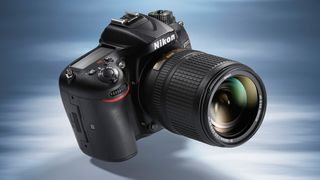
Great value option: Nikon D7200
This old-timer is still a cracking option for enthusiasts

Sensor: APS-C CMOS | Megapixels: 24.2MP | Autofocus: 51-point AF, 15 cross-type | Screen type: 3.2-inch screen, 1,299K dots | Maximum continuous shooting speed: 6fps | Movies: 1080p | User level: Intermediate

Before we get onto our top 10 picks of the best DSLRs you can buy right now, let's take a look at this great value option. The D7200 is a prime example of an older mid-range DSLR that packs enough under its skin to maintain its relevance in today's market. Ideal for those capturing outdoors, the 24.2MP APS-C sensor lacks a low-pass filter to help it retain plenty of detail, while the 51-point AF system is adept at tracking moving subjects. You also get a tough, magnesium-alloy body that's protected against inclement weather, together with two card slots and a large LCD scree. Its age, and the launch of the D7500 that updated it (below), has allowed its price to drop to a tempting level too. Well worth a look if you don't need the very newest camera

Best DSLR cameras in 2019

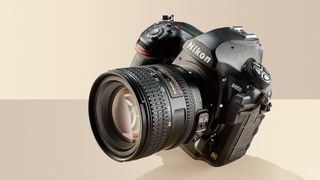
1. Nikon D850
High resolution meets high speed

Sensor: Full-frame CMOS | Megapixels: 45.4MP | Autofocus: 153-point AF, 99 cross-type | Screen type: 3.2-inch tilt-angle touchscreen, 2,359,000 dots | Maximum continuous shooting speed: 7fps | Movies: 4K | User level: Expert

It's hard to think of another DSLR that wows like the D850 does. It's on the pricey side for sure, but this is justified by excellent image quality, bags of features and a rugged, weather-resistant magnesium alloy body. The 45MP sensor is one of the highest in terms of resolution in any DSLR, while the 7fps burst mode is unusually high for a camera with such a sensor. Add to that a cracking AF system, wonderful handling and great 4K video, and it's versatility should be easy to appreciate. Like the sound of the D850, but want to go mirrorless? Well, while not strictly a mirrorless version of the D850, Nikon's newer Z7 mirrorless camera shares the same 45MP resolution as the D850, but features some clever tech of its own, including an all-new lens mount.
Share
Tweet
Pin
Share
No comments
Older Posts

Airpod i11

Airpod i11
TWS i11 5.0 True Wireless Earphone

About me


Follow Us

  • facebook
  • twitter
  • instagram
  • Google+
  • pinterest
  • youtube

Labels

  • Laptop
  • Mobile
  • camera

recent posts

Sponsor

Facebook

Blog Archive

  • ▼  2020 (1)
    • ▼  July (1)
      • LG Q92
  • ►  2019 (57)
    • ►  December (1)
    • ►  October (10)
    • ►  September (14)
    • ►  August (32)

Contact Form

Name

Email *

Message *

Created with by ThemeXpose | Copy Blogger Themes